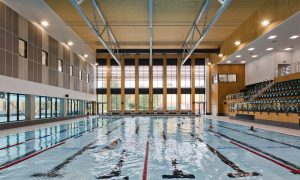
Build It Ready: Future-Proofing Our Leisure Centres
11 Sep 2026

By Josh Wardle, Passivhaus Designer
Fuel poverty is usually discussed as a household issue. But rising energy costs are also placing increasing pressure on the public buildings and services our communities rely on.
This year’s World Green Building Week theme, ‘Build It Ready’, calls for buildings that are resilient, efficient and prepared for future challenges. For the UK’s ageing leisure estate, that conversation feels particularly important.
The energy crisis has highlighted the cost of heating our homes, while recent periods of extreme heat have demonstrated another growing challenge: maintaining comfortable temperatures when the weather changes.
Both point towards the same underlying issue. Buildings that require too much energy to operate leave us more exposed to changing energy prices, climate conditions and future demands.
For local authorities, this is an environmental challenge, but it is also a financial and social one. Energy is an unavoidable operational cost. Every pound spent unnecessarily on running a building is money that cannot be invested in maintaining facilities, improving services or supporting communities.
Built resilient
Swimming pools and leisure centres are among the most energy-intensive buildings within a local authority’s estate.
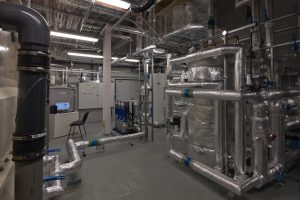
Heating pool water and internal spaces, managing ventilation and humidity, providing hot water and continuously operating filtration and circulation systems all create significant energy demand.
The Local Government Association reports that ageing and energy-inefficient leisure facilities can account for between 10% and 40% of a council’s direct carbon emissions. More than two-thirds of public sport and leisure facilities are also past their expected lifespan and require refurbishment or replacement.
Much of this estate dates from the 1960s, 70s and 80s. These facilities have served their communities for decades, but many were designed long before today’s expectations around energy efficiency, climate resilience and operational performance.
The implications extend beyond carbon.
High energy demand creates financial exposure, operational risk and additional pressure on public services. Reducing that demand can strengthen environmental, economic and social resilience at the same time.
A building that needs less energy is less exposed to fluctuations in energy prices and better prepared for future changes to energy infrastructure and carbon requirements. Good design can also help create more stable and comfortable internal conditions as our climate changes.
Built efficient
Much of the UK’s leisure estate will require significant investment over the coming years. Whether that means refurbishment, extension, deep retrofit or replacement will depend on the individual facility.
This isn’t an argument for replacing existing buildings unnecessarily. Retaining and improving an existing building can often be the most sustainable solution.
Instead, major investment should be seen as an opportunity to address the underlying performance of the asset and reduce the amount of energy it needs in the first place.
That can mean improving building fabric and airtightness, reducing heat loss, recovering heat from ventilation, optimising pool systems, improving filtration and pumping efficiency, and using effective controls and building management systems.
The lowest-energy leisure centre is the one that doesn’t need the energy in the first place.
Reducing demand first also makes buildings more adaptable to future technologies. Whatever happens to energy generation and infrastructure over the coming decades, a building that inherently requires less energy gives future low-carbon systems less work to do.
Built for opportunity
The value of improving our leisure centres extends far beyond the buildings themselves.
These facilities provide places for swimming lessons, exercise and rehabilitation, alongside social prescribing, community activities and opportunities for people to meet and connect.
Their ability to remain open, affordable and attractive to users depends, at least partly, on their ability to remain financially viable.
When energy costs rise, operating budgets come under pressure. That can ultimately affect opening hours, services and the ability to reinvest in facilities. Reducing energy demand can therefore play an important role in protecting the long-term viability of the service itself.
There is a wider social opportunity too.
A local authority may not be able to solve an individual household’s fuel poverty, but its public buildings can provide a lifeline: warm, cool, safe and comfortable spaces for people who may struggle to adequately heat or cool their homes.
As periods of extreme heat become more common, thermally resilient leisure centres and other civic buildings could become an increasingly valuable part of community resilience.
But social sustainability cannot be separated from accessibility and affordability.
There is little value in creating an exceptionally efficient leisure centre if people cannot afford to use it, cannot easily get there or don’t feel that the facility meets their needs.
Creating future-ready facilities therefore means thinking about location, transport, pricing, accessibility, opening hours, activities and user experience alongside energy performance.

An opportunity for local authority estates
Local authorities cannot transform their entire estates overnight. Investment needs to be targeted where it can deliver the greatest long-term value.
Leisure centres represent one of the clearest opportunities because they combine high energy demand and operating costs with ageing buildings and long asset lives.
They are also replaced or substantially refurbished relatively infrequently. Decisions made during the next major intervention could determine the energy performance and operating costs of these buildings for the next 40 to 50 years.
Each project therefore represents an opportunity to remove a significant long-term energy burden from the public estate while asking a wider question: is this facility genuinely meeting the needs of its community?
A technically efficient building that is poorly located, unaffordable or unsuitable for local users will not deliver the full social value of that investment.
The opportunity is bigger than reducing carbon emissions or lowering energy bills. Reducing operational costs can create greater capacity for future investment in buildings, services and communities.
Build It Ready
World Green Building Week gives us an opportunity to look beyond short-term carbon targets and think about what makes a building genuinely ready for the future.
For leisure centres, that means creating facilities that are resilient to climate and economic pressures, efficient in their use of energy and resources, and capable of creating lasting value for their communities.
It means recognising the opportunity presented by an ageing leisure estate, much of which will require major decisions about its future over the coming years. It also means making sure those decisions result in places that people actually want, and are able, to use.
If we know a leisure centre is going to be with us for another 40 to 50 years, why would we build today’s energy crisis into it?
Whether the next project involves deep retrofit, refurbishment, extension or new build, the objective should be the same: use that investment to create a building that needs less energy, is better prepared for the conditions ahead, costs less to operate and provides a valued service to its community.
The opportunity to Build It Ready is already here.
Our approach
We work across new-build and existing leisure facilities to reduce energy demand and improve long-term building performance.
Our experience in low-energy leisure design, including Passivhaus, allows us to consider building fabric, building services, pool energy demand and operational performance as one connected strategy.
But successful leisure facilities need to be more than technically efficient. Through our People Architecture approach, we consider the people who use, operate and invest in these buildings alongside their environmental performance.
That means creating places that are accessible, affordable and welcoming, and that respond to the needs of the communities they serve.
Whether the next step is deep retrofit, refurbishment, extension or a new-build facility, we have an opportunity to create leisure centres that are better prepared for the future.
With thanks to Joe Haywood for helping to provide the framework and thinking that shaped this article.